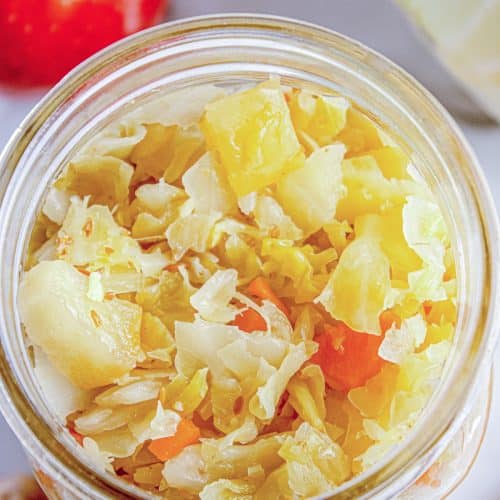
How to Make Sauerkraut
This homemade sauerkraut combines traditional fermentation with a flavorful twist. Crisp cabbage ferments with sweet apples, crunchy carrots, warming ginger, and aromatic cumin to create a tangy, probiotic-rich condiment that's miles better than anything you'll find in stores. The fermentation process takes anywhere from 7 to 30 days depending on your taste preference, but the hands-on work is only about 25 minutes. You'll end up with a quart of delicious, gut-healthy sauerkraut for less than three dollars - even if you use organic cabbage.
Ingredients
- 2 pounds green cabbage
- 15 grams kosher salt about 2½ teaspoons Diamond Crystal
- 1 tablespoon fresh ginger chopped very fine
- 1 cup red apple small dice
- ⅓ cup carrots grated or finely diced
- ½ - 1 tsp cumin seeds lightly crushed
- Filtered or boiled-and-cooled water if needed for brine
Instructions
- Prep the Cabbage: Peel off two outer leaves and set them aside. Quarter the cabbage, then cut out and toss the core. Roughly chop the cabbage quarters.
- Salt & Rest: Put the chopped cabbage in a large bowl and sprinkle all the salt over it. Mix it really well and let it sit for 5–10 minutes until it starts to sweat.
- Squeeze: Using clean hands, gently squeeze the cabbage until it releases liquid and shrinks down. If squeezing hurts your hands, put the cabbage in a freezer Ziploc bag and squeeze it there. You should see liquid collecting at the bottom of the bowl or bag.
- Add the Rest: Add the ginger, apples, carrots, and crushed cumin and mix them in gently. I don't squeeze at this stage, just combine them.
- Pack the Jar: Add the cabbage to the jar a little at a time, pressing it down after each addition. You can use your hands or a wooden spoon. As you press, the liquid will rise above the cabbage.
- Keep It Submerged: Lay the reserved cabbage leaves on top so everything stays under the liquid, and then add your fermentation weight and push it down; the liquid should come up over the weight. If the cabbage isn't fully covered, mix ½ teaspoon salt with 1 cup filtered or boiled-and-cooled water and add just enough to cover it. Important: Chlorinated tap water can prevent fermentation so use filtered, bottled, or boiled-and-cooled water.
- Tip: If you don't have a fermentation weight, you can use a clean rock (boiled first), or place a small ziplock bag in the jar, fill it with water, and seal it. The water-filled bag will press down on the cabbage.
- Cover and Ferment: Loosely cover the jar and don't seal it tight. Set the jar on a plate or bowl in case it overflows, and then keep it at room temperature, 65–75°F, out of direct sunlight.
- Taste: Start tasting around day 5. See the notes for what you should look for at this time.
- Store: Once you are happy with the taste, put a lid on your jar and refrigerate.
Notes
What to Expect: A Fermentation Timeline
Knowing what's normal at each stage of fermentation takes the guesswork out of making sauerkraut. Temperature makes a big difference in this timeline. A warm kitchen (closer to 75°F) will move through these stages faster. A cool kitchen (around 65°F) will take longer at each stage. Both are fine - you're just on a different schedule. Here's what you should see as your kraut develops: Day 1: After you pack the jar, the brine should be clear, and the cabbage should look fresh. You might see a few small bubbles as you press down, but not much activity yet. The cabbage will still be quite firm and crunchy. Days 2-3: This is when things start to get interesting. You'll begin to see small bubbles forming in the brine. The liquid might get slightly cloudy. If your kitchen is warm, you might notice a faint sour smell when you lift the cover. The brine level may rise as fermentation produces more liquid. Days 4-5: Fermentation is in full swing now. You should see active bubbling - press down on the weight and watch bubbles rise to the surface. The brine will be noticeably cloudy. When you lift the cover, you'll smell that characteristic tangy, pickle-like aroma. You might see white sediment starting to collect at the bottom of the jar. This is dead yeast cells and bacteria along with vegetable matter - completely normal and a good sign. The cabbage will have softened somewhat, but should still have a good crunch. Days 6-10: The most active fermentation phase is slowing down. You'll still see some bubbles, but not as dramatically as on days 4-5. The brine stays cloudy. The smell is definitely sour and tangy. More white sediment will accumulate at the bottom. This is when many people start tasting and deciding if they like the flavor, especially if your kitchen is on the warmer side. Days 11-14: Fermentation continues but at a slower pace. Bubbling becomes minimal. The sauerkraut is developing deeper, more complex flavors. The cabbage continues to soften slightly, but should maintain good texture. If you prefer a milder kraut, this might be your sweet spot. Days 15-30: The flavor gets more intense and sour as fermentation continues slowly. Different bacterial strains are taking over at this stage, creating more complexity. The cabbage will be softer than in week one, but shouldn't be mushy. Less visible activity, but the bacteria are still working. Throughout this process, keep an eye out for bad signs: pink, black, or fuzzy mold anywhere in the jar; a slimy texture; or a rotten smell (remember, sour is good, putrid is bad). If you see any of these, toss the batch and start over.Nutrition
Serving: 4ouncesCalories: 322kcalCarbohydrates: 76gProtein: 13gFat: 2gSaturated Fat: 0.4gPolyunsaturated Fat: 0.3gMonounsaturated Fat: 0.5gSodium: 6012mgPotassium: 1879mgFiber: 27gSugar: 44gVitamin A: 8110IUVitamin C: 341mgCalcium: 408mgIron: 6mg
Well, what did you think?Please rate this recipe here! It helps other readers and also helps to support our site.