Honeysuckle Knit Lace Shawl
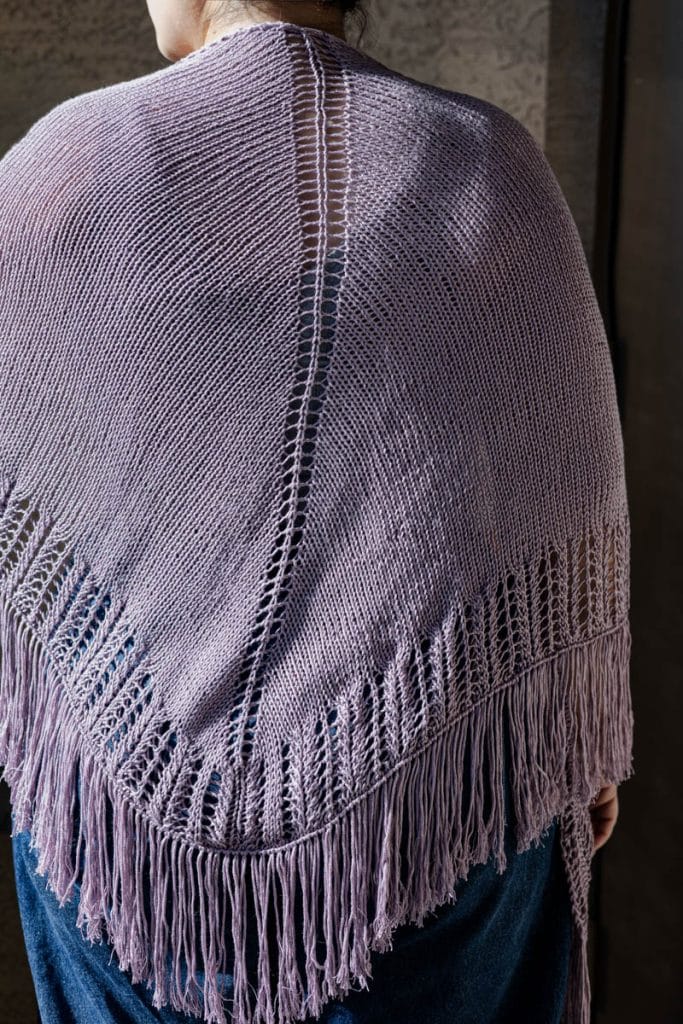
The Honeysuckle Knit Lace Shawl starts small and grows into something genuinely beautiful, which makes it perfect for a first lace project. You cast on just 7 stitches, then work a simple increase section to build the shape before moving into the lace. Because the construction is symmetrical — two body sections mirroring each other across a center spine, with clean edges on both ends — you’ll understand what you’re making at every step rather than just following rows blindly.
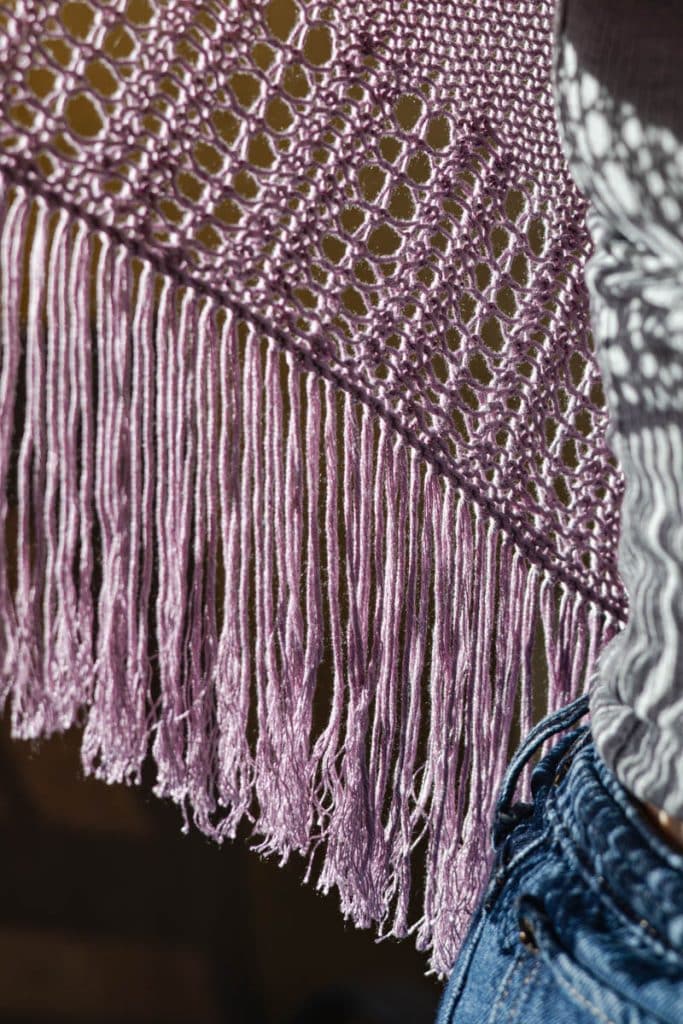
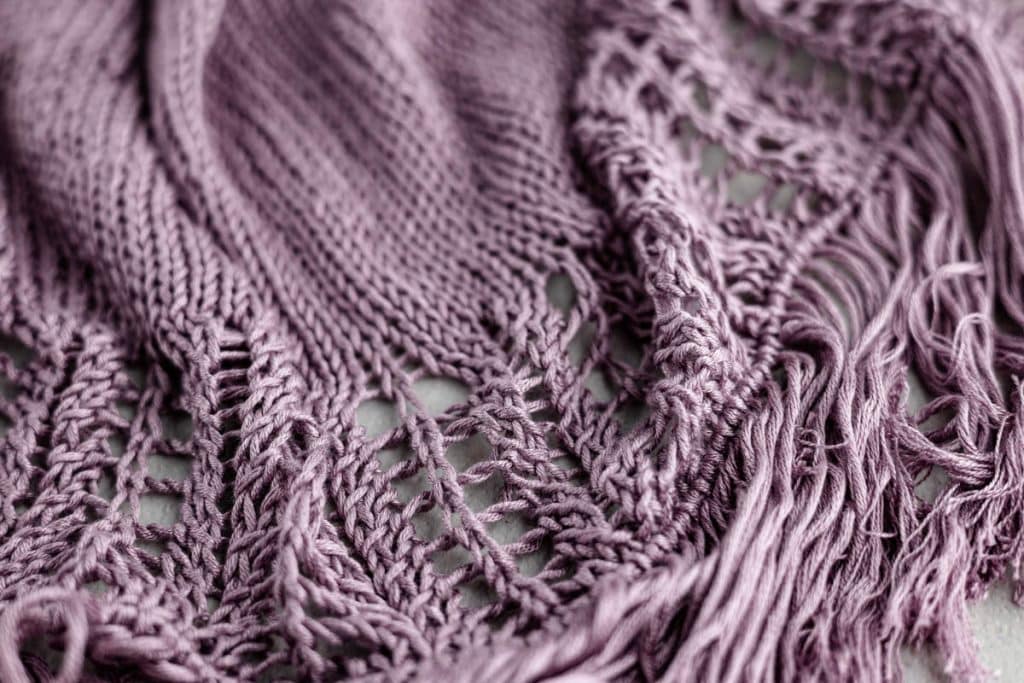
This shawl is worked flat from the center point outward, beginning at the narrow tip and fanning out to the full wingspan, draping across your shoulders. The increase section is straightforward and rhythmic, and by the time you reach the lace, you’ll have a solid feel for how the fabric is behaving. The lace pattern itself has a short two-row repeat that becomes intuitive quickly. Finished with a generous fringe, the Honeysuckle Knit Lace Shawl will be stunning draped over your shoulders on a cool evening.
Silky Soft yarn by Loops & Threads gives this shawl a wonderful drape without added weight, and the finished fabric has a lovely, fluid quality that really lets the lace breathe. Before you cast on, take a few minutes to read through the full pattern so the construction feels familiar when you get there. It’s also helpful to read through the Tips for Success and Troubleshooting sections to help you avoid mistakes and frustrations.
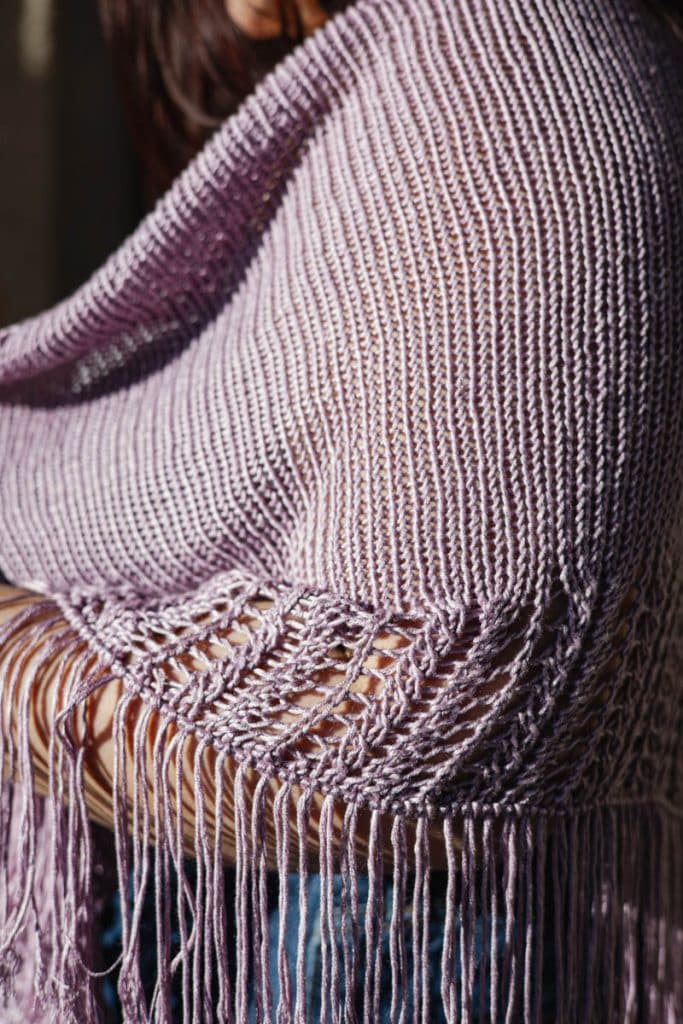
Table of Contents
Tips for Success
- Swatch before you start. Gauge affects both the finished dimensions of this Knit Lace Shawl and how the lace looks, so a quick swatch on your smaller needles is worth the time.
- Use stitch markers and trust them. The two markers flanking your center spine stitch are your anchors for the entire increase section. Moving them correctly on every RS row keeps your shaping on track.
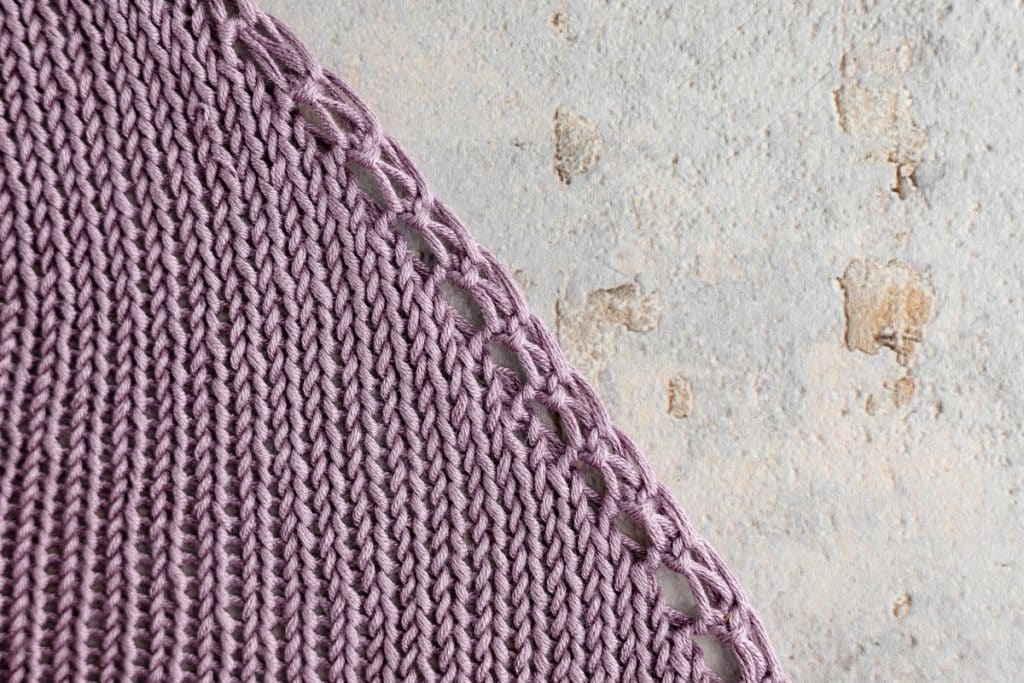
- Slip that last stitch on every row. It’s easy to forget, but this one step is what gives you the tidy selvage edges that make fringe attachment clean and even.
- Count after every RS row during the increase section. You should gain exactly 4 stitches each time. A quick count takes seconds and saves you from having to unknit a dozen rows later.
- Switch to your larger needles for the bind off. A tight bind off will pucker the edge and fight the lace. The US 10.75 (7.00 mm) needles give you the loose, relaxed edge this shawl needs.
- Block aggressively. This is not optional. Steam blocking with real stretching is what opens the lace and fully reveals the pattern. Pin it out generously and let it dry completely before removing the pins.
- Because rayon from bamboo is a smooth, slightly slippery fiber, it shows uneven tension more readily than a textured or elastic yarn would. It’s worth taking a few minutes to read through this overview of tension in knitting before you go much further.
Finished Measurements
- 29 inches in length, plus 6 inches of fringe
- 65-inch wingspan
Gauge
17 stitches by 27 rows = 4 inches by 4 inches in lace pattern, after blocking.
Materials Needed
Some of these links may be Amazon affiliate links and I may earn a small commission from the sale of these products to help defray the costs of operating this site, but the price you are charged is not affected. You can see my full disclosure policy here.
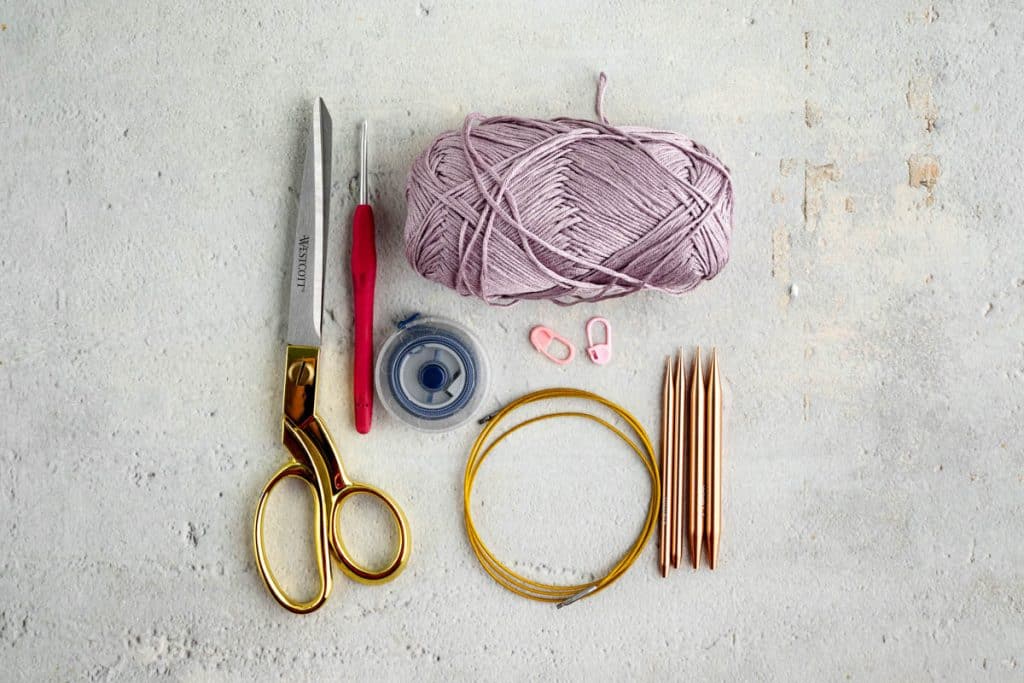
- US 8 (5.00 mm), 60cm circular knitting needles
- US 10.75 (7.00 mm), 60cm circular knitting needles (for bind off)
- Crochet hook (for fringe)
- Stitch markers (2)
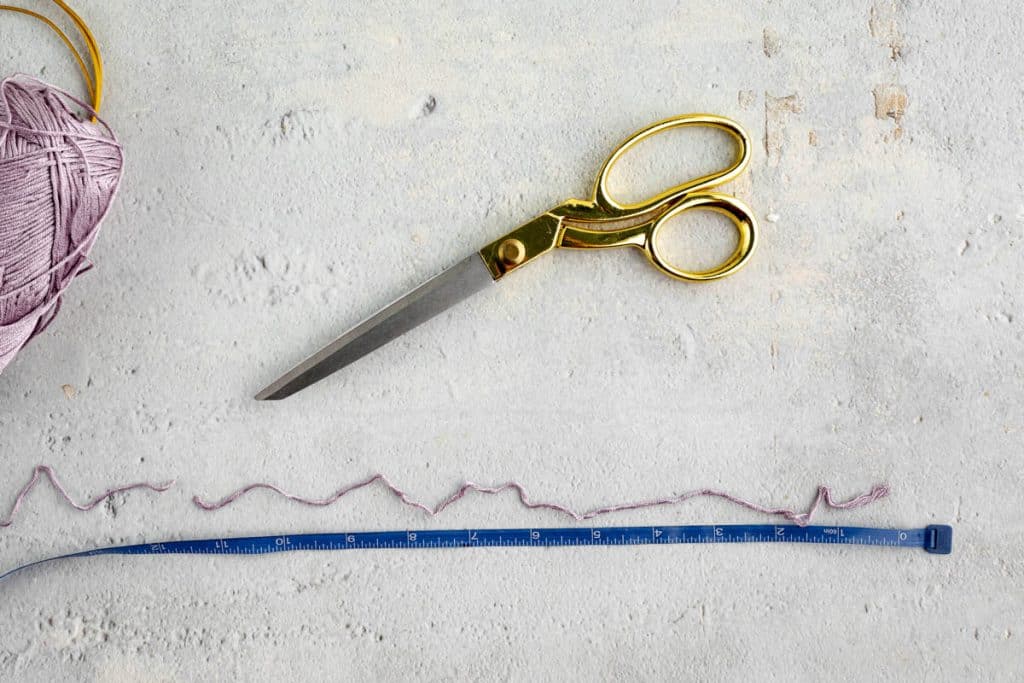
- Tape measure
- Scissors
- 222 g Silky Soft Yarn by Loops & Threads
- This free Crochet Beach Bag Pattern is available in the post below and as a free, ad-free printable PDF for subscribers. You can find the pattern in the Miscellaneous section of the Knit + Crochet Patterns Library (your super-secret password is included at the bottom of every Monday’s Newsletter email), or email me and I’ll send it to you. Not a subscriber? C’mon—we’d love to have you. A subscription costs nothing and gives you access to all our printables and pattern PDFs. Click here to have the Honeysuckle Knit Lace Shawl pattern directly emailed to you.
A Quick Note About the Yarn and Yarn Substitutions
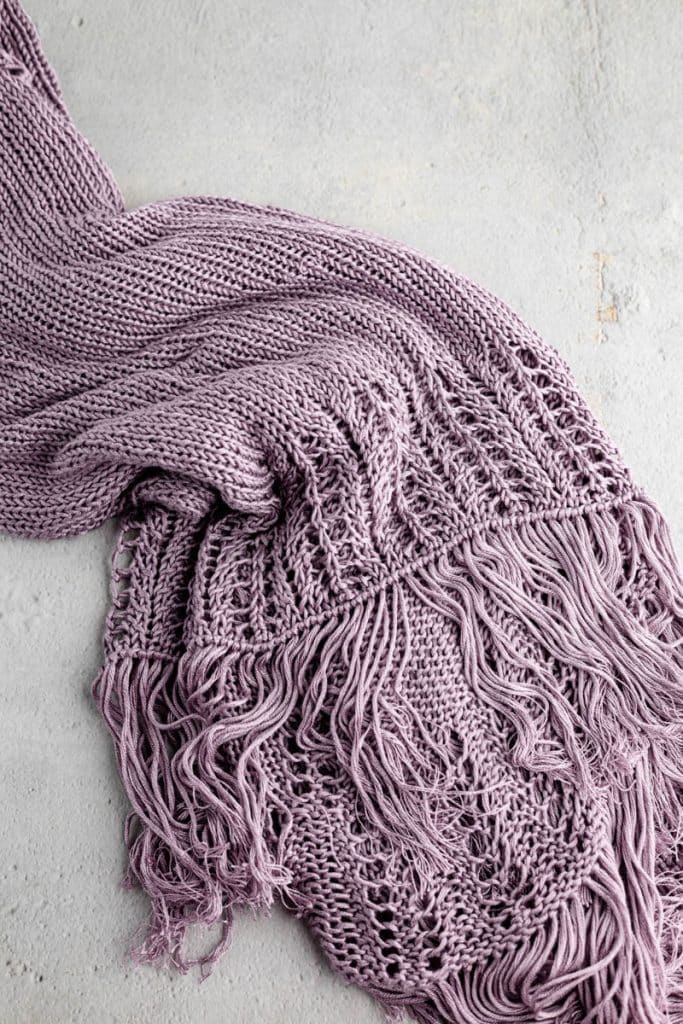
The yarn we used, Silky Soft by Loops & Threads, is 100% rayon from bamboo, a DK-weight yarn with a lovely drape and subtle sheen that suits this pattern beautifully. It’s an affordable option available at Michael’s, though availability can vary by location, so check stock before you start. I use their ‘store pickup’ option frequently… a huge time-saver. If you can’t find it or want to explore alternatives, yarnsub.com is a great free resource for finding substitutes — search by yarn name and filter by fiber, weight, and price point.
One thing to keep in mind: this pattern uses a larger needle than the manufacturer recommends, which is exactly what gives the fabric its open, drapey quality. If you substitute a different yarn, start with that same principle — go up a needle size or two from the yarn label’s suggestion and swatch until the fabric has that loose, fluid feel rather than a dense one.
For this shawl, you want a yarn with good drape rather than elasticity. Wool and wool blends tend to spring back, which can fight the lace and make blocking harder. A bamboo, bamboo blend, or other plant-based fiber will give you that flowing quality that makes a lace shawl look its best.
A few options worth considering: Lion Brand Truboo is a DK weight (#3) 100% rayon from bamboo with a soft hand and a bit of shine, and it works up beautifully for shawls. Lion Brand Coboo, also a DK weight (#3), blends cotton and bamboo for slightly more structure while still maintaining good drape — a nice choice if you want the shawl to hold its shape a bit more. Premier Yarns Bamboo Fair is another widely available, budget-friendly DK-weight (#3) cotton-bamboo blend worth a look. Whichever yarn you choose, do a gauge swatch before you cast on — even yarns with similar fiber content can behave differently on the needle.
Abbreviations
- k — knit
- p — purl
- yo — yarn over
- ssk — slip, slip, knit
- k2tog — knit 2 together
- SM — stitch marker
- PSM — pass stitch marker
- sl — slip stitch purlwise
Pattern Instructions
Slip the last stitch purlwise on every row to keep clean, even edges.
Setup
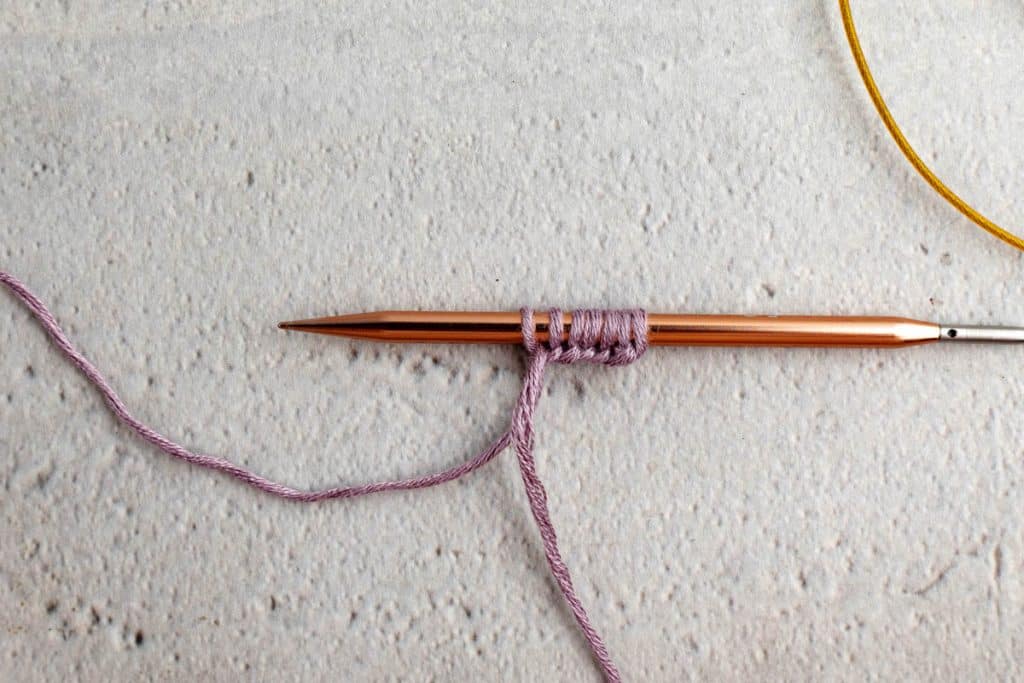
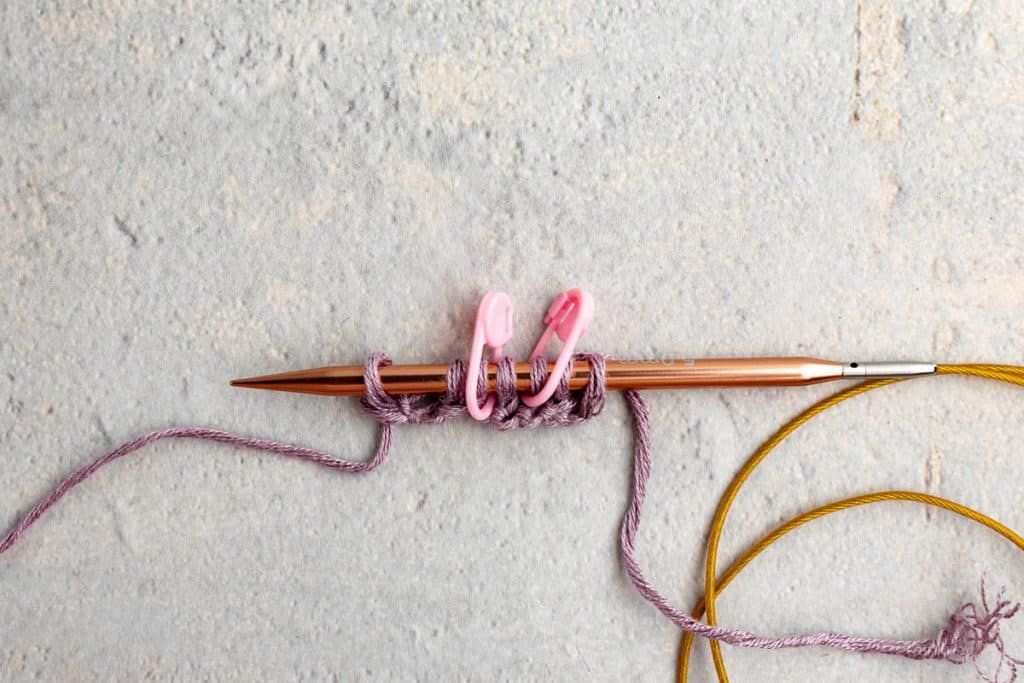
- Using the smaller US 8 (5.00 mm) needles, cast on 7 stitches.
- Row 1 (RS): k3, place SM1, k1, place SM2, k2, slip last stitch purlwise.
- Row 2 (WS): purl 6 stitches, slip last stitch purlwise.
Increase Section
- Row 3 (RS): k2, yo, k until SM1, yo, PSM1, k1, PSM2, yo, k until last 2 stitches, yo, k1, sl last st purlwise.
- Row 4 (WS): purl to last stitch, slip last stitch purlwise.
Repeat Rows 3 and 4 until you have 253 stitches total, ending on a wrong-side row.
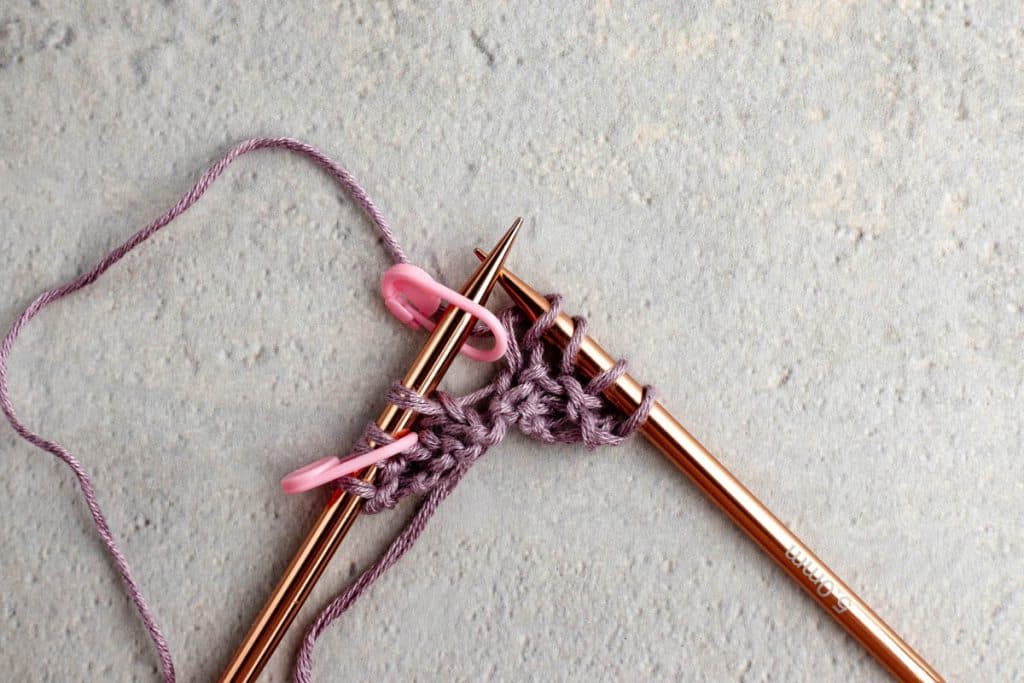
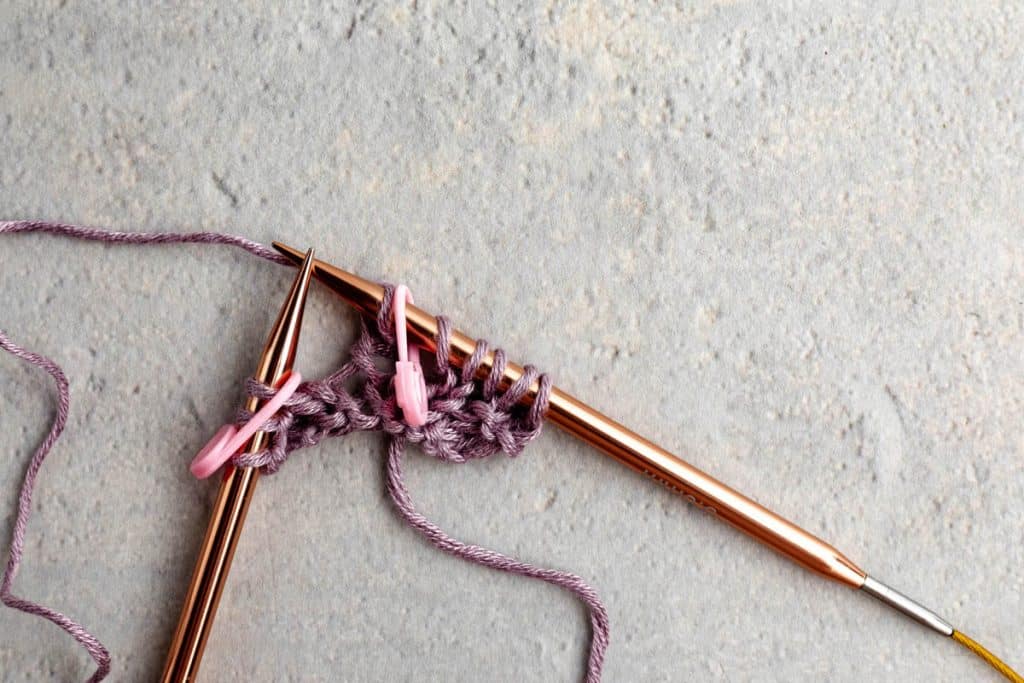
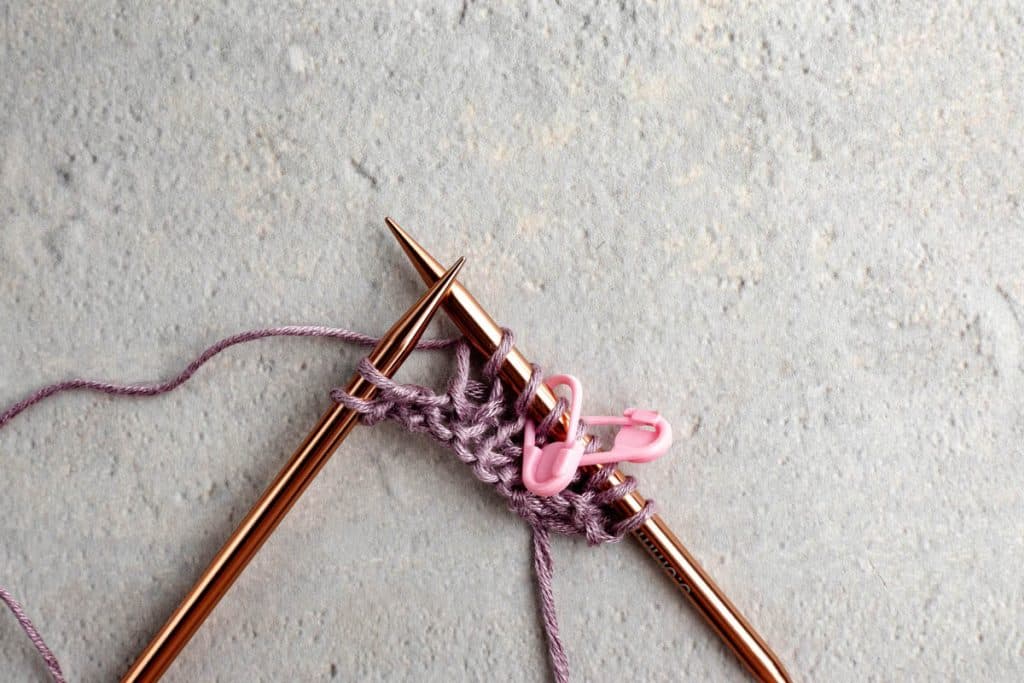
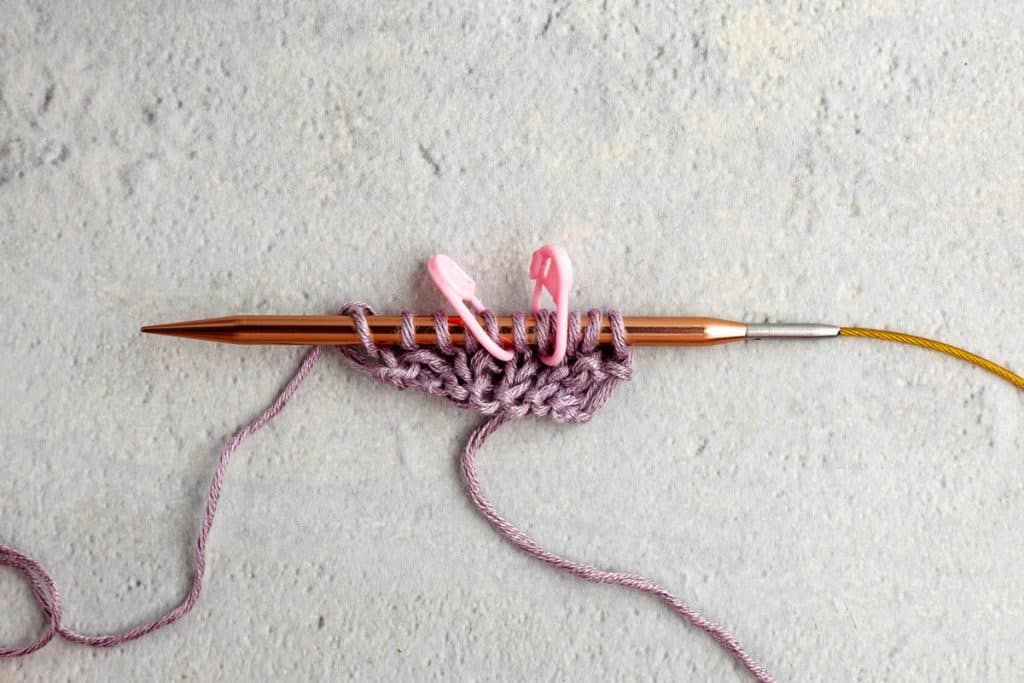
Note: You are increasing 4 stitches every right-side row. Two stitches are added at the edges and two at the center, which form the spine running down the middle of the shawl.
Lace Section
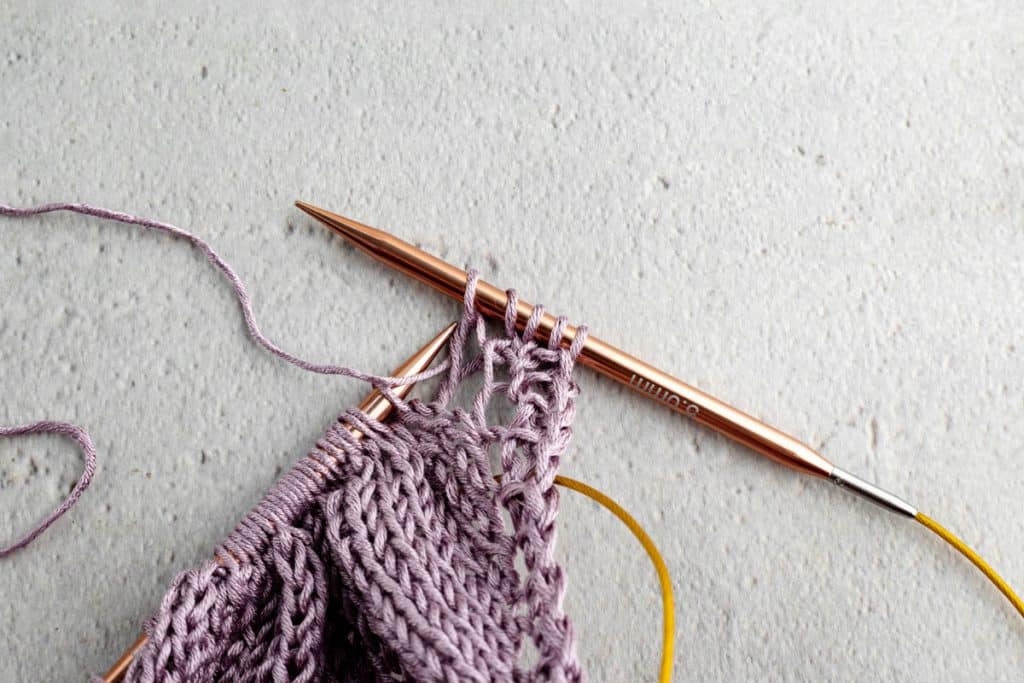
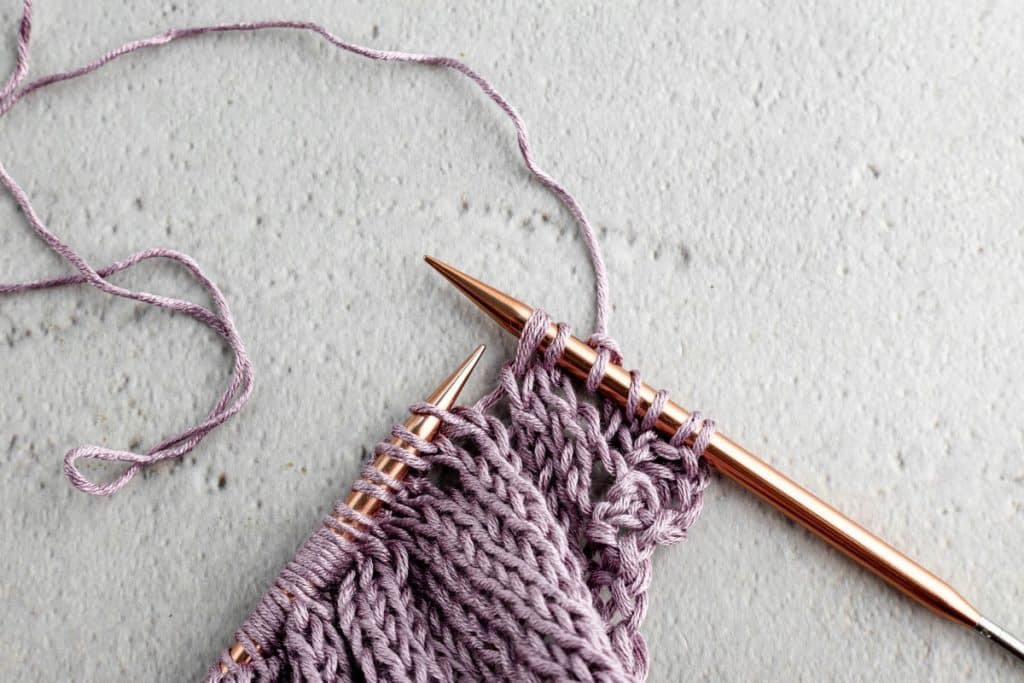
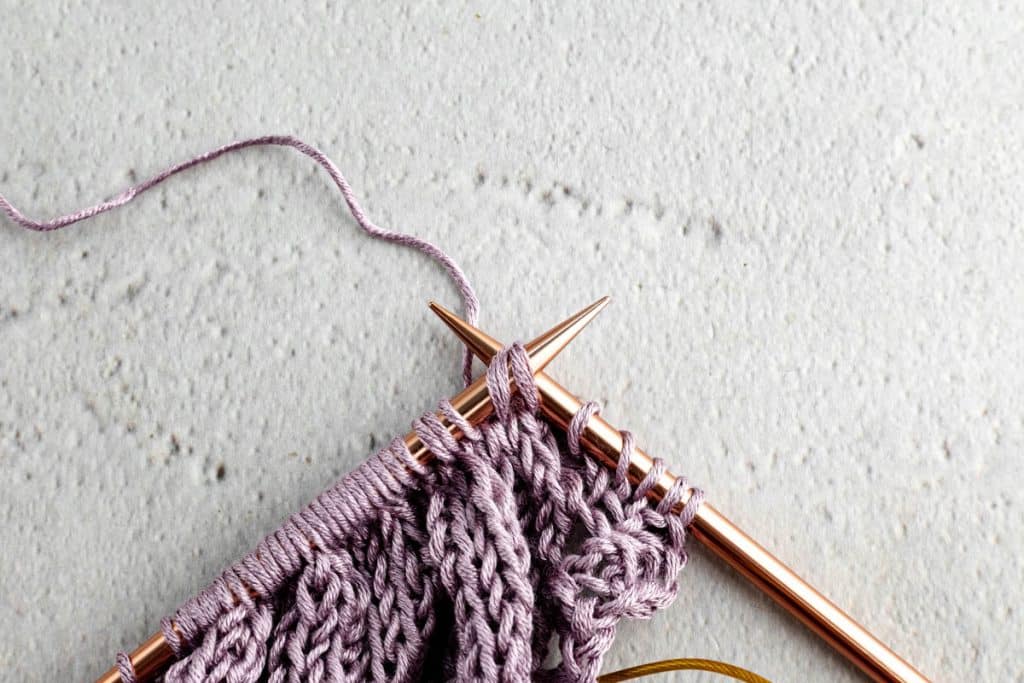
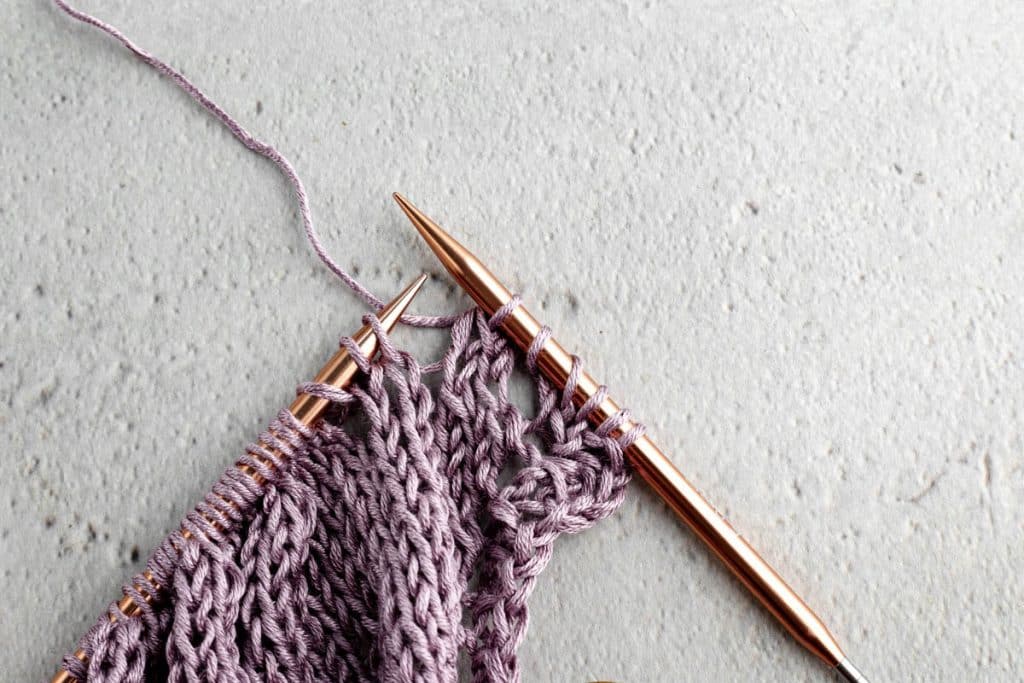
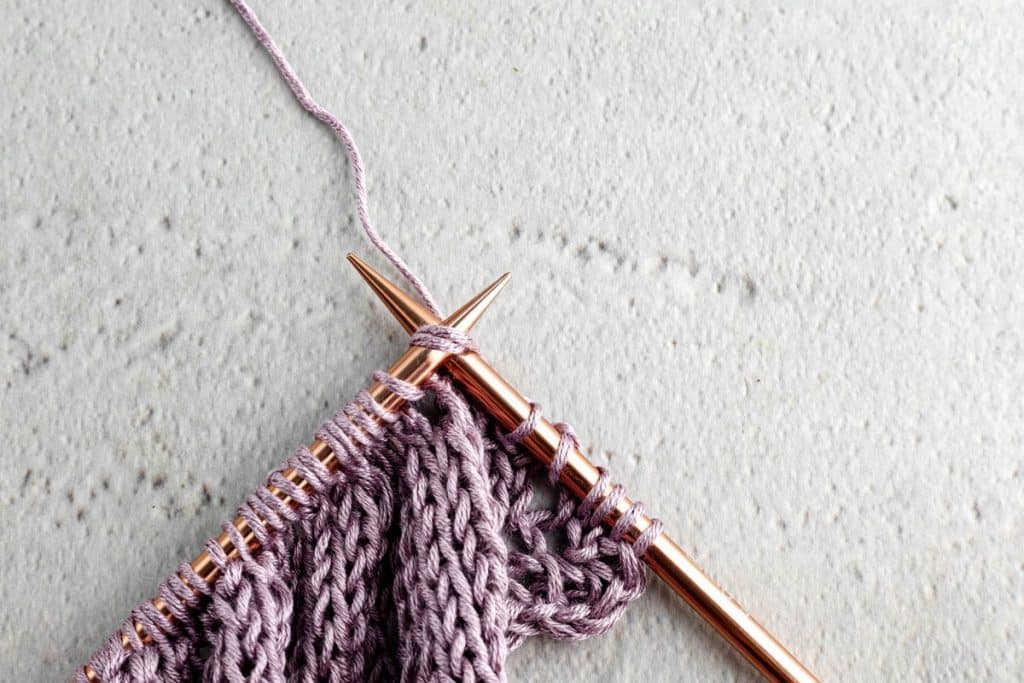
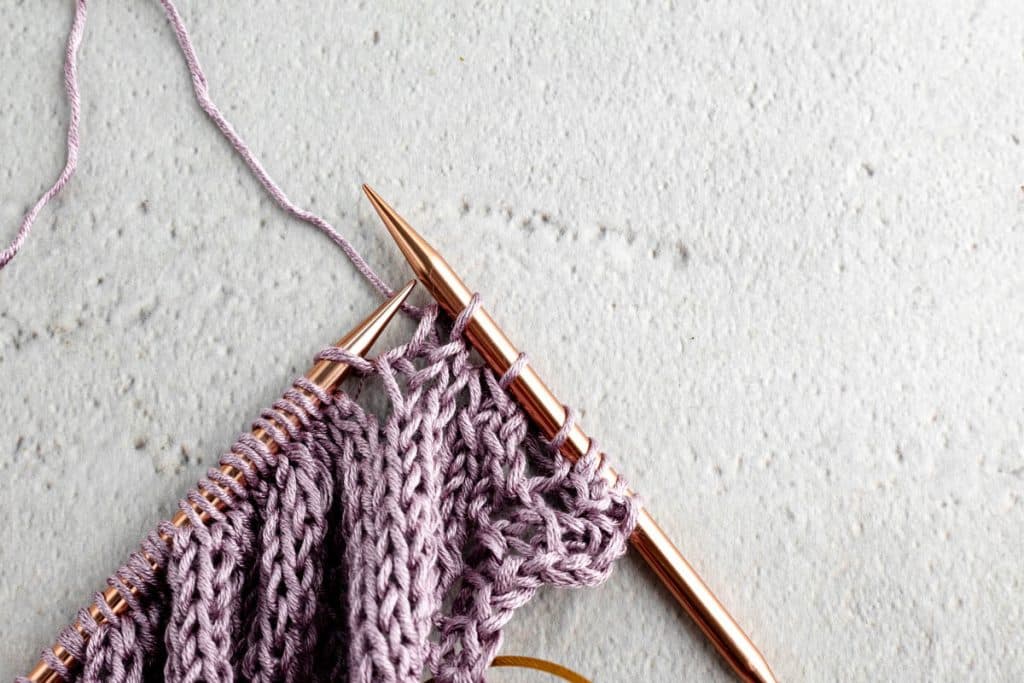
- Row 1 (RS): k2, *k1, yo, k1, ssk, k2tog, k1, yo; rep from * to 5 sts before SM1, k2, yo, k1, ssk, PSM1, k1, PSM2, k2tog, k1, yo, k2, *k1, yo, k1, ssk, k2tog, k1, yo; rep from * to last 2 sts, k1, sl last st purlwise.
- Row 2 (WS): purl to last stitch, slip last stitch purlwise.
Repeat these 2 rows for a total of 16 rows.
Bind Off
Switch to the larger US 10.75 (7.00 mm) needles and bind off loosely using a standard bind off. The looser bind off keeps the lower edge from pulling in once you block the shawl.
Adding the Fringe to the Lace Shawl.
- Cut 12-inch strands of yarn.
- Fold each strand in half to form a loop.
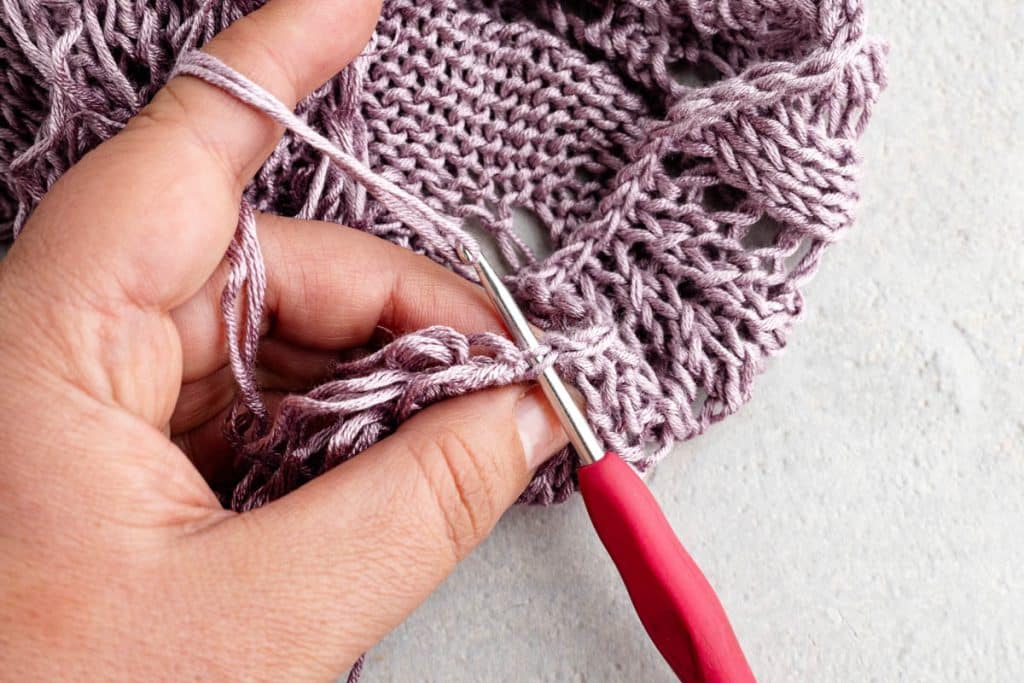
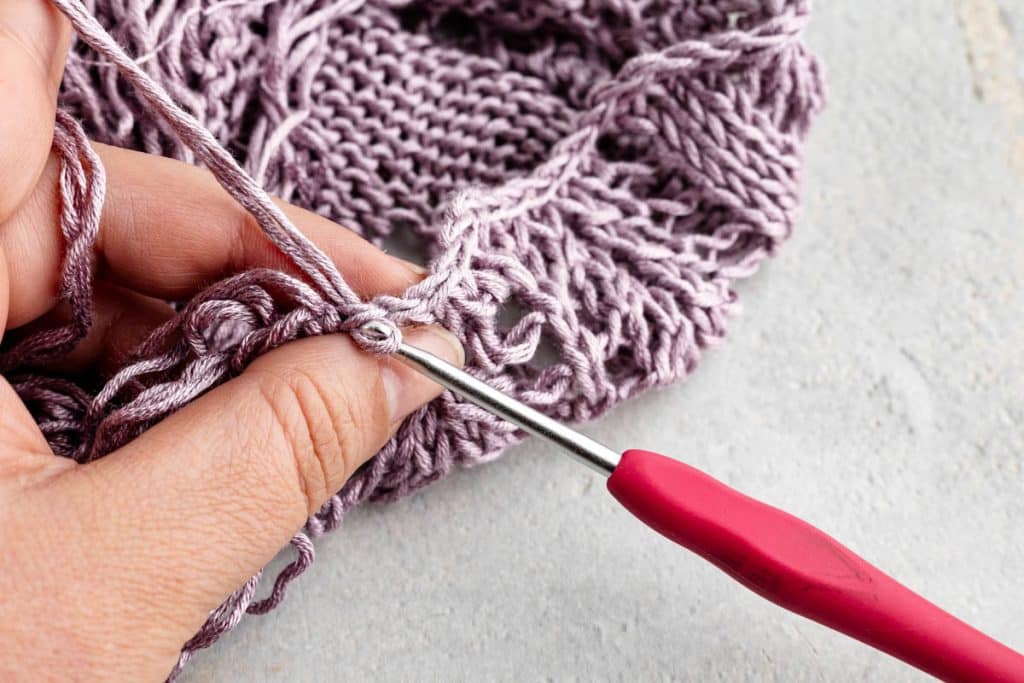
- Using a crochet hook, pull the loop through an edge stitch.
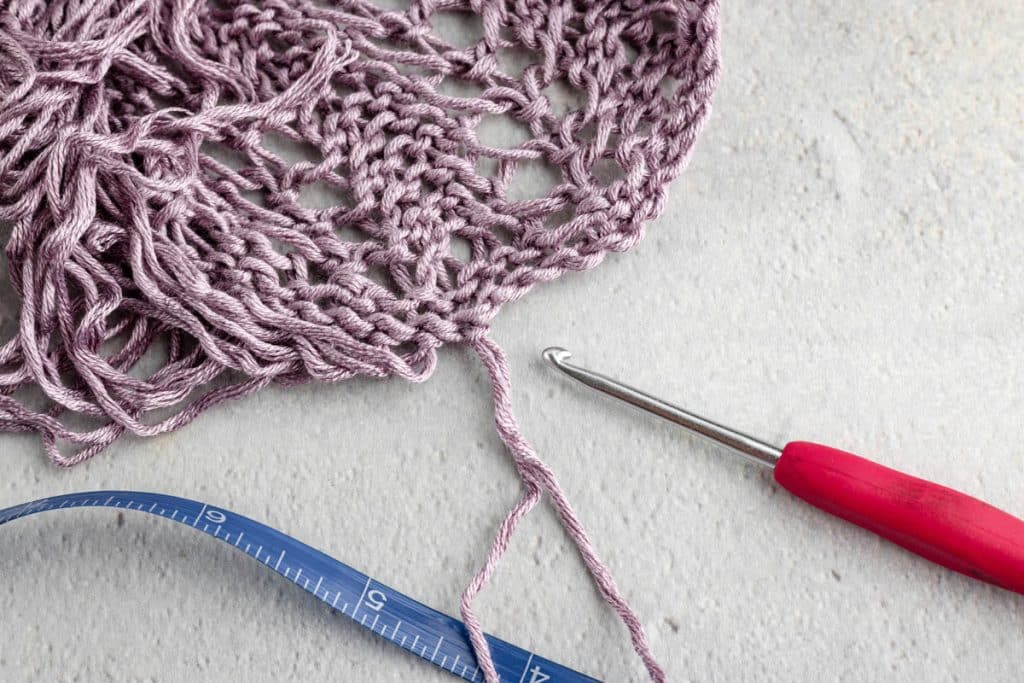
- Pull the ends through the loop and tighten.
- Repeat evenly across the lower edges of the shawl.
Notes and Tips
- Block aggressively with steam, stretching the lace to fully open it. This step makes a real difference.
Troubleshooting this Honeysuckle Knit Lace Shawl
Check your yarn overs first — they’re the easiest thing to drop or accidentally knit into the row below. Also, confirm you passed both stitch markers and worked the increases on both sides of each one. In the lace section, make sure each ssk and k2tog has a corresponding yarn over to keep the count neutral.
You may have forgotten to slip the last stitch purlwise on one or more rows. Unfortunately, this one is hard to fix after the fact, so if you notice it early, it’s worth going back.
The lace repeat is 8 stitches wide. If things look off, count back to confirm you have the right number of stitches before the first marker and that your repeat is landing correctly on both sides of the spine.
Switch to an even larger needle if needed, or try a stretchy bind-off method. A standard bind off on the same needles you’ve been knitting with will almost always be too tight for lace.
Cut all your fringe strands at once using a piece of cardboard as a guide to keep them the same length. Space them evenly across the edge before you start attaching — it’s easier to adjust spacing before the hook comes out than after.